In May 1762, an English newspaper reported that a woman serving time on the pillory for perjury was stripped naked by an angry crowd and, “pelted her so severely that she had hardly any signs of life left when she was taken down.”
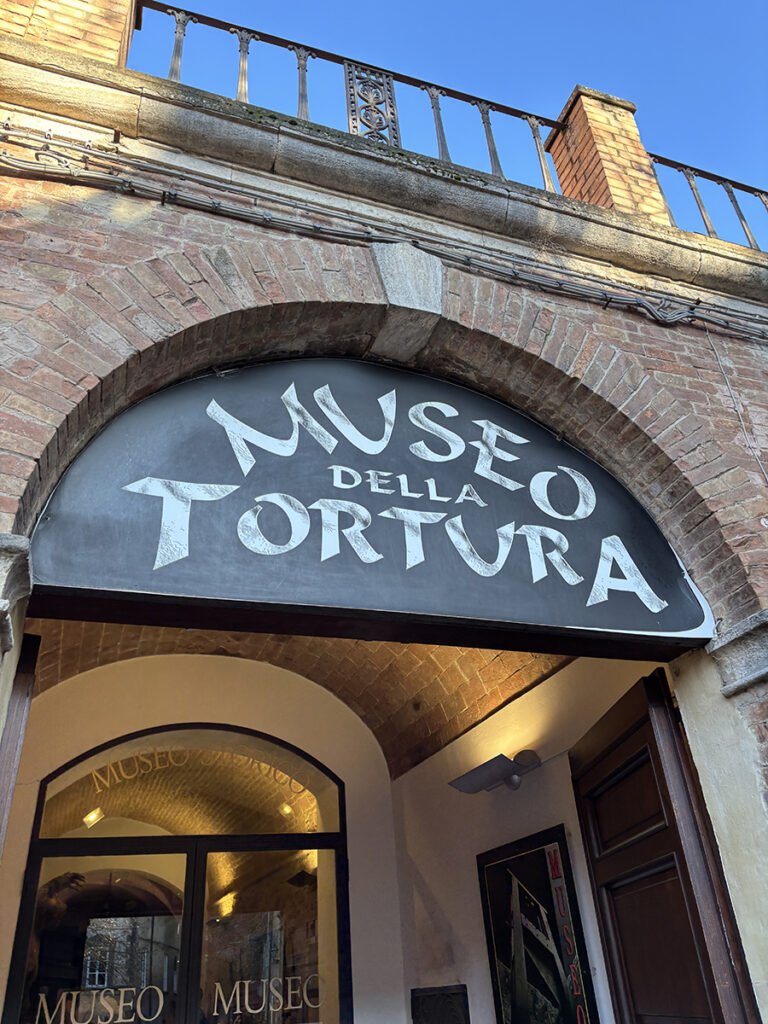
It’s hard to imagine such a cruel and unusual punishment today, but centuries ago, it was commonplace. In fact, the pillory was among the more tame forms of punishments. Many other torturous devices inflicted far worse on its subjects. During a recent visit to the Museo Della Tortura in Volterra, Italy, I encountered some of the classics: the guillotine, the iron maiden, and the rack. Horrific. But equally awful was the Nail Barrel.
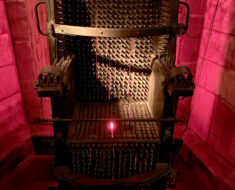
The Nail Barrel is exactly what it sounds like: a barrel with nails or iron spikes lining the surface inside it. Criminals were placed within and then rolled down a slope, causing them to be continuously stabbed. This device dated back to as early as 256 BC.
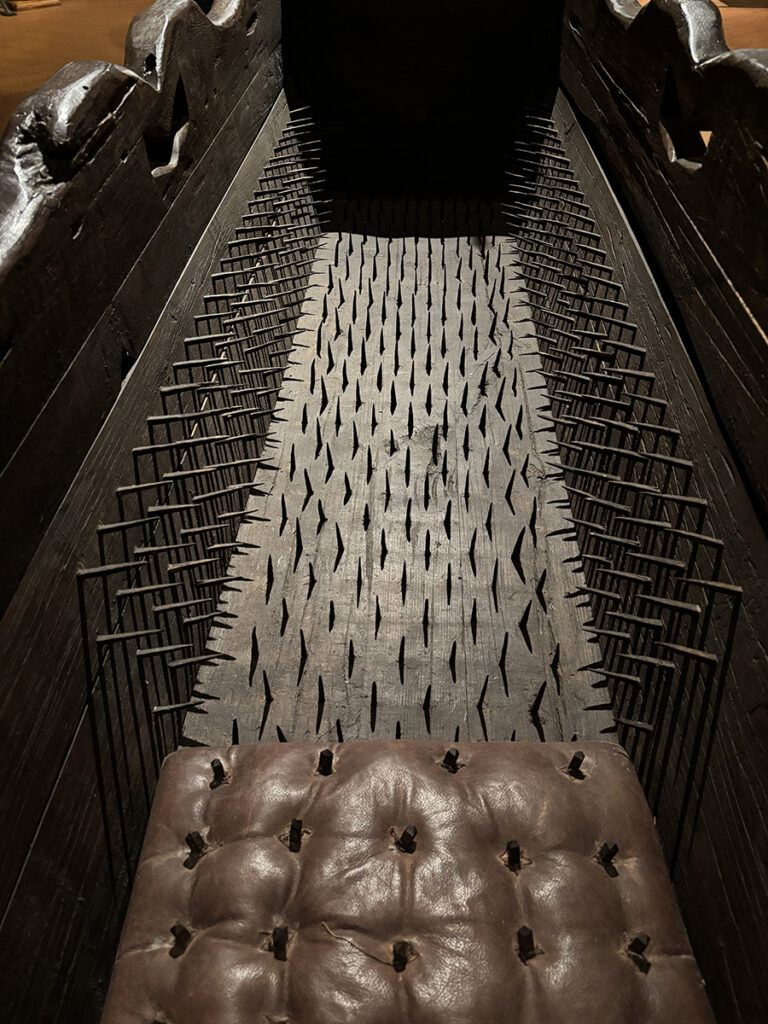
The Torture Cradle employed a similar concept. But, as you might guess, the spikes lined a cradle. The adult-size “cradle” held its victims as torturers rocked it back and forth. If no confession was given, the offender would eventually be stabbed to death. Cradle to cradle to grave.
The Head Crusher was another disturbing device. Its victim’s chin would rest on the machine’s lower bar, while the cap was cranked downward. As the display explained: “With the head wedged in this position, the force exerted from above first cracked the dental alveoli, then the jawbones until finally the skull shattered and the cerebral matter poured out.” Though no longer in use to execute criminals, the museum claims it’s “still employed today as an instrument of torture to extract confessions.”
Let’s hope to never find out.