In the 1920s when Spiritualism enjoyed a wave of popularity, one of its most celebrated mediums was Nino Pecoraro. And one of his biggest champions was Sir Arthur Conan Doyle, creator of Sherlock Holmes.
Doyle was an ardent Spiritualist and a frequent lecturer on its merits. After a Pecoraro séance in which he allegedly made instruments play and produced the spirit of Doyle’s deceased son, the famed writer proclaimed him the greatest medium he had ever seen. Pecoraro also famously claimed to have channeled the spirit of fellow Italian medium, Eusapia Palladino. Her voice—in native Italian—was often heard during his séances. At times he even produced ectoplasm and invited photographers to capture it on film.
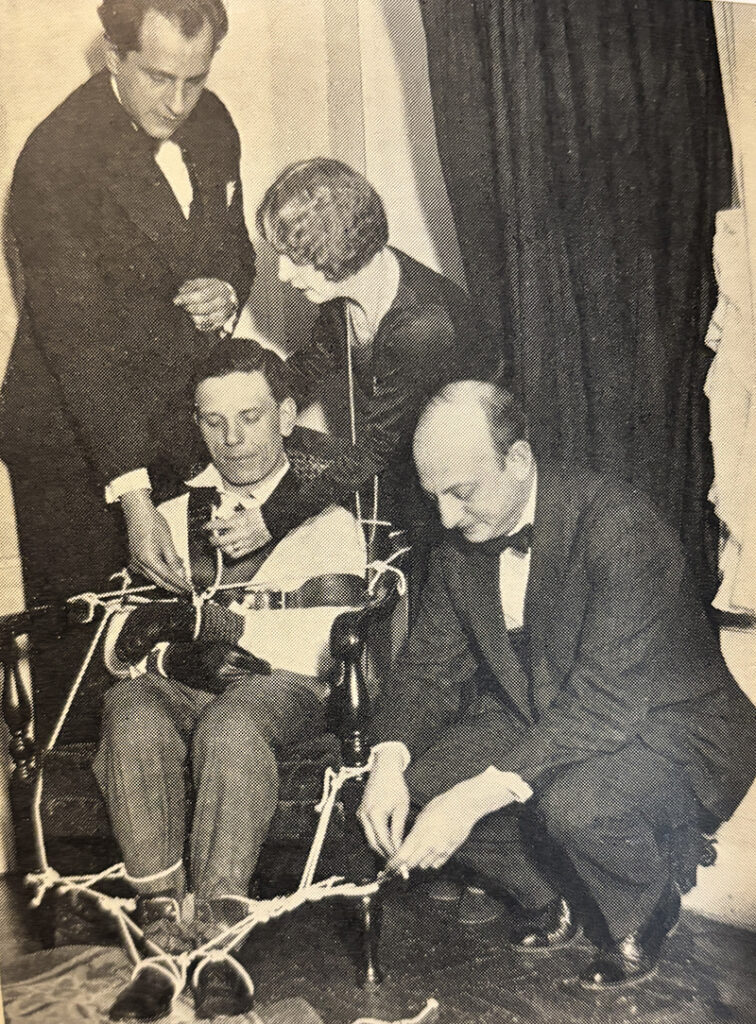
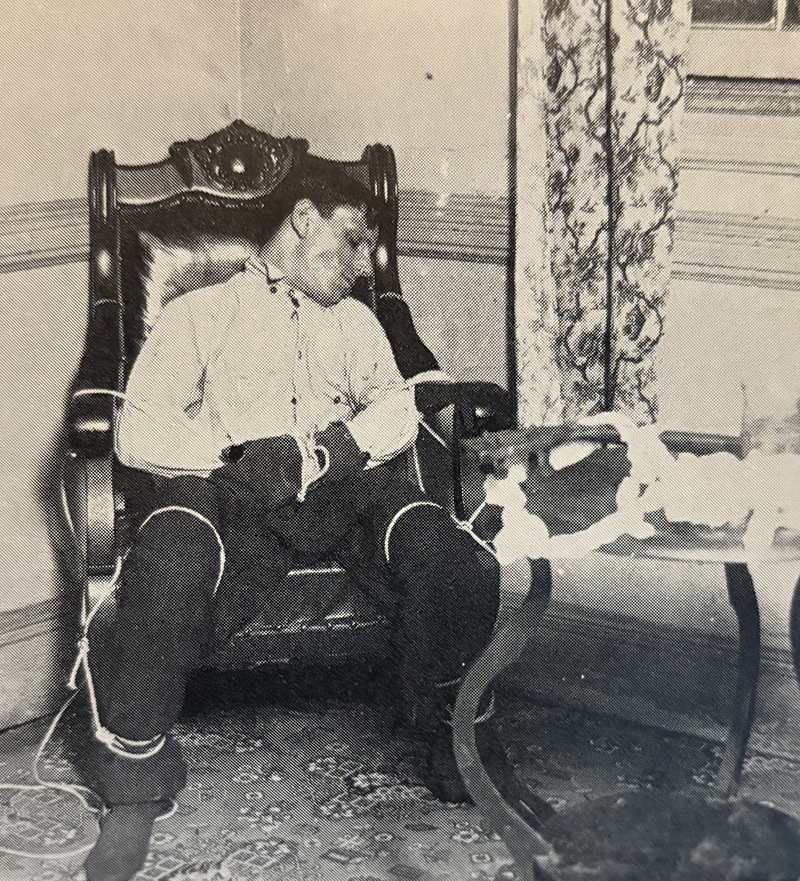
As I wrote in my book, Chasing Ghosts: A Tour of Our Fascination with Spirits and the Supernatural (Quirk Books, 2021), Pecoraro attempted to win a $2,500 prize offered by Scientific American in 1924. The respected magazine was in search of a genuine medium, and if its panel of experts were convinced by a psychic’s powers, the money was theirs. The panel included the magazine’s leading editor, J. Malcolm Bird, Dr. William McDougall of Harvard, psychical researcher Hereward Carrington, Houdini, and others.
Some members of the panel were so impressed they believed the phenomena produced was real. Yet, after Houdini joined his colleagues in a subsequent test, he spent two hours tying him up and Pecoraro suddenly could no longer produce a single spirit. He didn’t win the prize (no one did), but he still had his believers.
However, on April 8, 1931, after fooling many Spiritualists and numerous scientific investigators, Pecoraro pulled a stunt few if any mediums of the era ever did: he came clean.
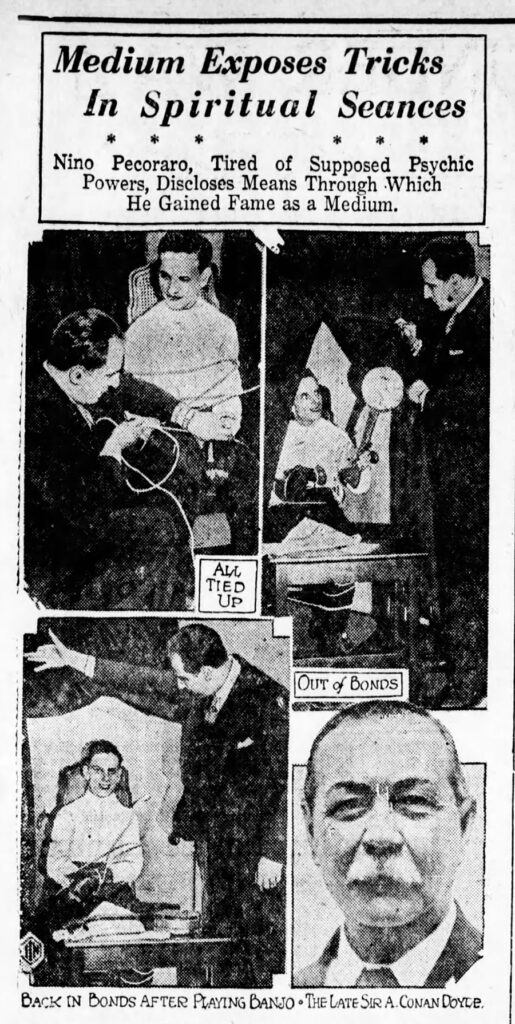
The medium brought his confession to magician Joseph Dunninger, who, like Houdini, worked tirelessly to expose fraudulent mediums. With a group of reporters gathered for the occasion, Pecoraro’s confession included details about fooling Doyle. As one newspaper described it:
For Pecoraro, that problem was elementary. After being tightly bound, the medium retired into the cabinet while Sir Arthur and his guests clasped hand, sang ‘Nearer My God to Thee’ and darkened the room. Pecoraro quickly squirmed out of the ropes and handcuffs which bound him, wrote a perfect imitation of the handwriting of Sir Arthur’s son on a pad of paper, reproduced the son’s voice and crawled back into the ropes and handcuffs.”
Pecoraro even let Dunninger tie him to a chair, put leather mittens on his hands and a rope around his neck. From behind a black curtain, with a table in front holding a pad of paper and a pencil, he recreated his act with the lights on.
“Soon Pecoraro’s hand appeared from behind the curtain, grasped the pencil and paper and wrote: ‘I still live—Houdini,’” the article added. Dunninger called the penmanship “an exact duplicate” of Houdini’s and noted that the medium had spent months perfecting it.
As his act continued, he produced the voice of Palladino and “began to utter prophecies, in the midst of which Pecoraro’s face appeared from behind the curtain, saying: ‘It’s only me.’”

When Dunninger pulled the curtain open, Pecoraro was still seated in the chair, but the ropes and mittens were on the floor, and his shirt had come half off while wriggling out of the bonds.
Pecoraro also explained his ectoplasm trick—a mere wave of a handkerchief, which, when caught on film, left a blurred image with semi-transparent edges.
“I’ve never seen a ghost, and I don’t believe anyone else has ever seen one,” Pecoraro told the press. “I’m sick and tired of giving seances and having others reap the profits. When ghosts appear at my seances they are Nino Pecoraro in the flesh.”
Having given up his paranormal vocation, Pecoraro sought work as a portrait painter or a cement salesman where he could make an honest living, among the living.