In 1589, a grim spectacle unfolded in the German town of Bedburg. A man named Peter Stump (also spelled Stumpf or Stubbe) was accused of being a werewolf—and not just any werewolf, but one of the most monstrous in recorded lore. Tortured into confession, Stump claimed he had practiced black magic since age twelve and pledged himself to the Devil.
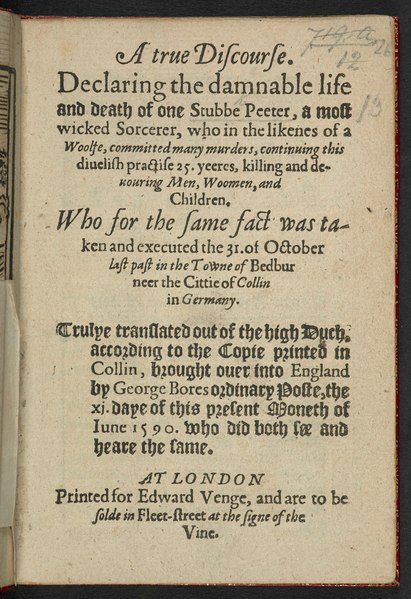
A 1590 English pamphlet titled The Damnable Life and Death of Stubbe Peeter recounts:
The Devil, who hath a ready ear to listen to the lewd motions of cursed men, promised to give him whatsoever his heart desired during his mortal life: whereupon this vile wretch neither desired riches nor promotion, nor was his fancy satisfied with any external or outward pleasure, but having a tyrannous heart and a most cruel bloody mind, requested that at his pleasure he might work his malice on men, women, and children, in the shape of some beast, whereby he might live without dread or danger of life, and unknown to be the executor of any bloody enterprise which he meant to commit.
The Devil obliged, bestowing upon him a magical girdle, allowing him to transform into a ravenous wolf—“strong and mighty, with eyes great and large, which in the night sparkled like unto brands of fire, a mouth great and wide, with most sharp and cruel teeth, a huge body and mighty paws.” Under this supposed spell, he admitted to a 25-year reign of terror.
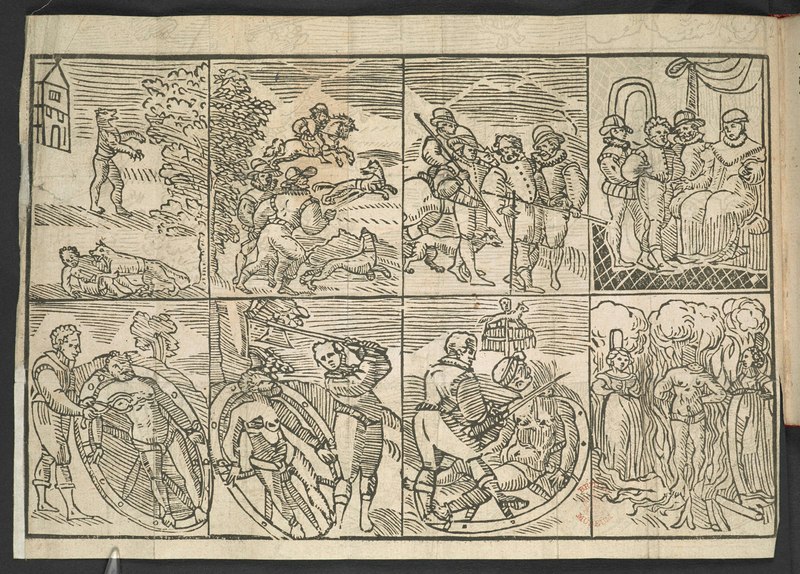
According to his confession, Stump murdered and cannibalized fourteen children and two pregnant women, devouring their unborn fetuses. He confessed to killing his own son and feasting on the boy’s brain “as a most savory and dainty delicious mean to staunch his greedy appetite.” The allegations didn’t stop there—Stump was also charged with incest, said to have fathered a child with his daughter and engaged in relations with a succubus sent by the Devil himself. It was a confession soaked in blood, sin, and supernatural horror.
His execution on October 31, 1589—before the date was celebrated at Halloween—was equally theatrical and brutal: he was strapped to a wheel, had his flesh torn with red-hot pincers, his limbs broken, and was finally beheaded before being burned. His daughter and mistress were also put to death for allegedly aiding in his crimes.
The story is one of many featured in Montague Summers’ 1933 book, The Werewolf. While Summers, who also wrote extensively on witches and vampires, appeared to be a believer, modern scholars certainly debate the truth behind the werewolf of Bedburg (and any werewolves). Some view it as a politically or religiously motivated show trial during a time of intense Catholic-Protestant conflict. Others interpret it as an early example of how societies demonize outsiders or explain horrific crimes through the lens of folklore. Whether madman, scapegoat, or monster, Peter Stump remains one of history’s most infamous werewolves.

Now, more than 400 years later, this book is available once again from Curious Publications! Purchase on Amazon.

![Toby The Sapient Pig, 1817 [Public domain], via Wikimedia Commons](https://www.weirdhistorian.com/wp-content/uploads/2017/05/Tobythesapientpig-1871-crop-235x190.jpg)